Best AIS Transponders of 2026: Class B Buyer's Guide
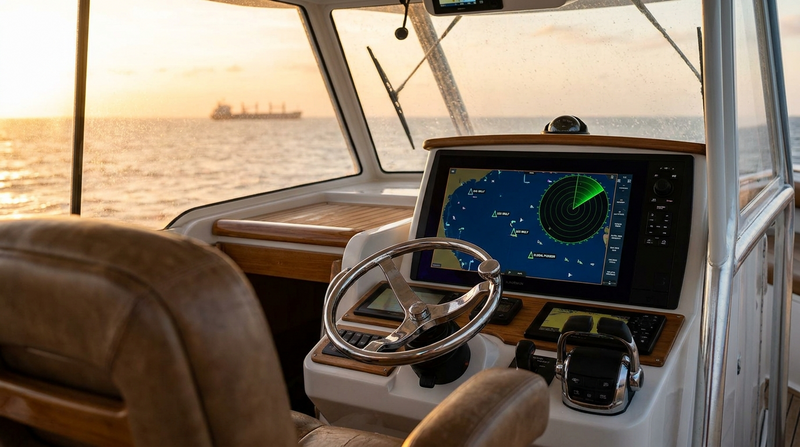
Every summer we get calls from offshore boaters who had a close call with a container ship. The story is usually the same: vessel appeared out of haze or rain squall, changed course unexpectedly, and the skipper had no idea what was happening until they were already reacting. A Class B AIS transponder would have given them that ship's name, heading, speed, and closest point of approach — twelve minutes before radar contact.
AIS (Automatic Identification System) started as a mandatory commercial shipping tool. For recreational boaters running offshore, crossing shipping lanes, or navigating in restricted visibility, it's become one of the most high-value safety upgrades you can make. Not because the Coast Guard requires it for recreational vessels — they don't — but because every commercial vessel that could do real damage to your boat is transmitting on AIS right now.
This is a complete buyer's guide to Class B AIS transponders for 2026. We've installed all five units covered here on customer boats and our own. Straight assessments, honest weak spots, and a clear recommendation based on what kind of boating you do.
What Is a Class B AIS Transponder?
Before the product breakdown, this distinction matters.
An AIS receiver lets you see other vessels on AIS. You can monitor commercial traffic, watch ship movements, know what's near you. Useful. But passive — you're invisible on their screens.
An AIS transponder both receives and transmits. Commercial ships, ferries, Coast Guard vessels, and other properly equipped boats can see your vessel identity, position, speed, and heading on their displays. The container ship on a collision course knows you're there.
Within Class B transponders, there are two standards worth knowing:
| Protocol | Transmit Power | Update Rate (Underway) | Best For |
|---|---|---|---|
| CSTDMA (original Class B) | 2 watts | Every 30 seconds | Coastal cruising, inland waterways |
| SOTDMA (Class B+) | 5 watts | Every 5 seconds | Offshore, shipping lanes, blue water |
If you're shopping for a new transponder in 2026, budget for SOTDMA if you do any offshore work. The difference in how visible you are to commercial traffic in a busy shipping lane is real — and the price premium is modest.
2026 AIS Transponder Comparison Table
| Unit | Price | Protocol | Power | Best For |
|---|---|---|---|---|
| Garmin AIS 800 | ~$873 | SOTDMA | 5W | Garmin ecosystem, offshore powerboats |
| Vesper WatchMate Vision2 | ~$1,047 | SOTDMA | 5W | Sailboats, liveaboards |
| Raymarine AIS700 | ~$1.199 | SOTDMA | 5W | Axiom / Axiom2 Pro users |
| Icom MA-510TR | ~$999 | CSTDMA | 2W | Budget buyers, coastal cruising |
Garmin AIS 800 — Best Overall for Power Boaters
~$873 SOTDMA 5 WattsThe AIS 800 is our most frequently installed unit on center consoles and express cruisers running Garmin systems. It communicates natively via NMEA 2000, shows up on GPSMAP and echoMAP displays as properly rendered AIS targets, and supports the SOTDMA protocol — so you're transmitting with near-Class A update rates in heavy shipping areas.
The installation is clean. There's a built-in VHF antenna splitter so you don't need to run a separate dedicated AIS antenna (your existing VHF antenna handles both), and the NMEA 2000 backbone connection is a single cable drop. On a well-wired center console, we've done this install in under two hours, including the GPS-over-NMEA-2000 configuration.
One thing to understand: the AIS 800 has no standalone display. It requires a compatible chartplotter to display AIS targets. On any Garmin MFD running current software, this is seamless. If you're running a mixed electronics setup with a non-Garmin chartplotter, double-check NMEA 2000 PGN compatibility — most modern MFDs handle it fine, but verify before you buy.
Program your MMSI before the boat ever leaves the dock. Free registration at boatus.com/mmsi.
Shop Garmin AIS 800 →Vesper Marine WatchMate Vision2 — Best for Sailboats & Liveaboards
~$1,047 SOTDMA Standalone DisplayThe Vision2 is built differently than every other unit in this guide. It has a built-in 4.3-inch standalone display, a WiFi hotspot that broadcasts AIS data to tablets and phones, a built-in anchor watch, and an integrated GPS. It's not just an AIS transponder — it's a vessel monitoring hub.
For a sailboat where the chartplotter is often off at anchor or on a slow overnight passage, the standalone capability is genuinely useful. We've installed these on bluewater passage-making boats specifically because the owner didn't want AIS monitoring dependent on their primary MFD being powered up. The WiFi feature means AIS targets show on a phone in the cockpit via apps like iNavX or Navionics without needing to be below.
The anchor watch function works well: set a drag radius, and the Vision2 alerts you if your GPS position moves outside it. We've sat in crowded anchorages in the Florida Keys where this was actually reassuring rather than a checkbox feature.
Weak spot: the 4-inch display is dated compared to a modern MFD. Don't expect to do detailed navigation on it. At $659, it's the premium choice — worth it for the right boat, unnecessary if you're running a full-time chartplotter setup.
Shop Vesper WatchMate Vision2 →Raymarine AIS700 — Best for Axiom Users
~$1,199 SOTDMA SeaTalkngIf your helm runs on Raymarine Axiom or Axiom 2 Pro MFDs, the AIS700 is the right call. It connects via SeaTalkng — Raymarine's proprietary backbone — and the integration is noticeably tighter than a generic NMEA 2000 connection. AIS targets render with cleaner labels, CPA (Closest Point of Approach) vectors are more accurate on screen, and alarm integration works the way it should.
The AIS700 handles dual-channel VHF reception (channels 87 and 88, the international AIS working frequencies), includes a built-in antenna splitter, and supports the SOTDMA standard.
Worth being direct about one installation reality: if you're running a Raymarine setup where your VHF radio's antenna is already feeding through a splitter to an existing device, you may need to plan your antenna routing carefully or add a dedicated AIS antenna. We've had two installs this year where the customer's existing cable layout required a second antenna run to avoid signal degradation. Not complicated, but worth knowing before you buy.
Shop Raymarine AIS700 →Icom MA-510TR — Best Budget Transponder
~$999 CSTDMA 2 WattsThe MA-510TR runs on the older CSTDMA protocol at 2 watts. That 30-second update rate is slower than the SOTDMA units, and the 2-watt transmit power means you're slightly less visible at distance. For heavy offshore commercial traffic, that's a real limitation.
For coastal cruising inside 15-20 miles, the Icom is plenty. You're visible to commercial traffic. The Coast Guard can see you. Other AIS-equipped boats in your area can see you. The threat profile from 30-second updates versus 5-second updates is meaningful offshore; inside a bay or coastal waterway, it's largely academic.
Installation connects via NMEA 0183 primarily, with NMEA 2000 available via an optional adapter (sold separately). Build quality is typical Icom: solid, waterproof, reliable. We've had zero hardware failures on these in the field.
Shop Icom MA-510TR →What to Think About Before You Buy
Receiver or Transponder?
An AIS receiver shows you other vessels but doesn't transmit your position. For day sailing in protected waters where you're never near commercial traffic — a receiver is arguably sufficient. The moment you're offshore, crossing shipping channels, or running at night, get a transponder. The $300-400 price difference is trivially small compared to what you're protecting.
What Network Is on Your Boat?
NMEA 2000 gives you the cleanest integration with modern MFDs from any brand. If your boat was wired pre-2015 and runs NMEA 0183, the Icom will drop in more cleanly. Boats with mixed networks can use either, but check your specific MFD compatibility first.
Offshore or Coastal?
Offshore — especially if you cross shipping lanes or run the Gulf Stream — budget for SOTDMA. The 5-watt, 5-second update rate matters when a 900-foot cargo ship is calculating CPA for you and there are 8-foot swells involved. For coastal work inside 20 miles, CSTDMA is fine.
Sailboat or Powerboat?
Sailboats spend more time with the chartplotter off, at anchor, or making slow overnight passages. The Vesper Vision2's standalone display and WiFi broadcasting matter more on a sailboat than on a center console that runs with the chartplotter on 100% of the time. Power boaters who want the cleanest integration should look at the Garmin or Raymarine units first.
Antenna Situation?
Every unit in this guide includes a VHF antenna splitter. But if you have an unusual existing antenna setup or a long cable run from antenna to helm, plan that out before installation. Weak antenna signal will kill your AIS range regardless of the unit's rated power.
Bottom Line
Offshore power boaters on Garmin: buy the Garmin AIS 800. SOTDMA protocol, native integration, clean install.
Raymarine Axiom users: the Raymarine AIS700 is the right pairing. The SeaTalkng integration is visibly better than generic NMEA 2000.
Sailboaters and liveaboards: the Vesper WatchMate Vision2 is worth the premium. The standalone display and WiFi broadcasting aren't gimmicks for a boat that sits at anchor for weeks at a time.
Coastal cruisers watching the budget: Icom MA-510TR is solid.
Whatever you buy, you'll be visible to commercial shipping, visible to the Coast Guard, and in a materially safer position than running without it.
Authorized reseller. Ships from 21 U.S. warehouses. Expert install support available.
Shop All AIS Transponders at NVN Marine →Related Posts
- Best Marine Radar Systems of 2026: Solid State vs Magnetron
- Best Marine VHF Radios of 2026: Fixed-Mount & Handheld Guide
- DSC on Marine VHF Radios Explained: Why It Could Save Your Life
- Best Marine Autopilot Systems of 2026: Buyer's Guide
- How to Network Marine Electronics with NMEA 2000