Every bass tournament angler has an opinion on trolling motors. Talk to the Minn Kota crowd and they'll swear by Spot-Lock. Talk to the Motorguide guys and they'll tell you the Tour Pro's Pinpoint GPS hasn't missed a beat in three seasons.
We've installed both. Run both in tournament conditions. And the reality? The Motorguide Tour Pro is a legitimately excellent motor that gets overlooked because Minn Kota's marketing budget is about three times larger.
Here's our honest breakdown.
What Is the Motorguide Tour Pro?
The Tour Pro is Motorguide's flagship GPS trolling motor — the top of their freshwater lineup. It competes directly with the Minn Kota Terrova, not the Ultrex (the Ultrex has integrated mechanical steering that the Tour Pro doesn't match). That distinction matters when you're comparing, because a lot of buyers lump them together without understanding what they're actually getting.
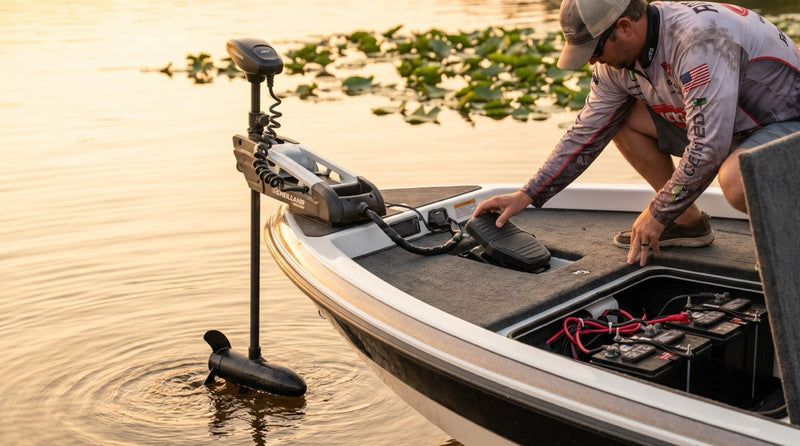
Available in bow-mount configuration, the Tour Pro runs on 12V or 24V systems depending on thrust, with a 36V option for the 105 lb model. Shaft lengths run 45", 54", 60", and 72" — options for everything from a low-riding tournament bass boat to a deep-V walleye rig on Lake Erie.
The motor ships with Motorguide's Pinpoint GPS Anchor system built in, along with a wireless foot pedal and a four-button wireless remote. No upsell required for the core features. That's a genuine differentiator versus some competing systems where you pay extra to unlock GPS functions.
Pinpoint GPS Anchor: How It Actually Performs
This is the question we get most, so let's be direct.
Pinpoint GPS Anchor works well. In calm-to-moderate conditions — light chop, sustained wind under 15 mph — it holds your position tightly. We fished tournament practice days on Smith Lake, Alabama where the motor barely moved for 40 minutes on a submerged grass flat. The motor was making micro-corrections you could barely see, and the boat sat locked on the spot.
Where it shows strain is in strong current and sustained wind above 18–20 mph. In those conditions, expect drift of 3–5 feet before the motor corrects. Minn Kota's Spot-Lock — especially the newer iLink version on the Ultrex — handles this slightly better, partly because the Ultrex's integrated steering can pivot the motor head faster than the Tour Pro's cable steer. That's a real and measurable difference for anglers who fish river flats, tidal systems, or exposed reservoirs in the wind belt.
For most still-water bass fishing? You won't notice the difference.
One thing that catches buyers off guard: Pinpoint GPS uses its own dedicated remote and doesn't integrate into your chartplotter's NMEA 2000 network. If you want to control your trolling motor from a Lowrance HDS or Garmin GPSMAP screen, the Tour Pro doesn't offer that. The Minn Kota Ulterra and Ultrex do via i-Pilot Link. For most bass guys this doesn't matter at all — but if you're running a full networked electronics package on a 22-foot rig and want everything talking to everything, know this going in.
The DVS Motor: Why Quiet Actually Matters at the Bow
DVS stands for Digital Variable Speed — it's the motor controller that regulates power delivery, and it makes the Tour Pro substantially quieter than older brush-type trolling motors.
We did an informal comparison last October on a tournament lake in Mississippi — Tour Pro 70 lb at 50% power versus a Minn Kota Terrova 80 lb at comparable power output. The Motorguide was noticeably quieter at low-to-mid speeds. Not dramatically, but enough that the angler standing at the bow could hear the baitfish on a Livescope screen more clearly without the motor's hum bleeding into the transducer signal.
For shallow-water finesse fishing — clear-water largemouth in 2–3 feet, pressured fish on tournament lakes in the southeast — this matters. Spooky bass in skinny water are less likely to blow out when your motor's running a quiet hum versus a louder buzz.
At full power the advantage narrows. Any 70–80 lb motor makes noise at wide open. The DVS advantage lives in the 30–60% power band where you actually fish most of the time.
Tour Pro Lineup: Models, Thrust, and 2026 Pricing
| Model | Thrust | Voltage | Shaft Options | 2026 Est. Price |
|---|---|---|---|---|
| Tour Pro 45 | 45 lb | 12V | 45", 54" | ~$749 |
| Tour Pro 55 | 55 lb | 12V | 45", 54", 60" | ~$849 |
| Tour Pro 70 | 70 lb | 24V | 54", 60", 72" | ~$1,049 |
| Tour Pro 80 | 80 lb | 24V | 54", 60", 72" | ~$1,199 |
| Tour Pro 105 | 105 lb | 36V | 60", 72" | ~$1,599 |
The 70 lb 24V is the sweet spot for most 18–21 foot bass boats. It handles normal tournament conditions — light to moderate wind, still water — without stressing a pair of group 27 batteries.
The 80 lb starts to pay off if you run a heavy boat, fish consistently windy lakes, or spend significant time at high speed settings holding against wind on large reservoirs like Lake Guntersville or Sam Rayburn.
The 105 lb 36V is tournament-specific hardware for 21+ foot boats in open-water environments where wind and boat weight demand constant compensation. For the tournament circuit crowd fishing big water? Right tool. For most recreational anglers? Overkill.
Not sure which thrust rating you need? Read our trolling motor thrust calculator and guide — it walks through the calculation for your specific boat weight and fishing conditions. And if you're deciding between battery systems, our 12V vs 24V vs 36V trolling motor systems explained post covers the tradeoffs in detail.
Wireless Foot Pedal: The Real Talk
The wireless foot pedal is one of the Tour Pro's strongest selling points — when it works. And it mostly works.
Signal range on the pedal is solid. We've walked to the back deck of a 21-foot Ranger with the motor up front and maintained full, lag-free control. That's a real test of the wireless system, and the Tour Pro passes it. The pedal is also physically tougher than it looks — it survives being stepped on wrong, dropped on aluminum deck plates, kicked into the livewell lid. Built to tournament spec.
The legitimate complaint: battery life. Under heavy tournament use — 8–10 hour days, constant steering inputs, lots of spot-lock engagement — you might drain the batteries in 3–4 tournament days. This isn't a disaster, but it's a real inconvenience when you're on day two of a two-day event and the pedal starts responding sluggishly because the AAA batteries are at 15%.
Keep fresh batteries in the boat. Motorguide has never fully addressed this, and experienced users know it. Responsiveness otherwise is excellent — direction changes are instant, no lag between foot input and motor response.
Durability and Mount Hardware
The Tour Pro's mount hardware is one area it quietly outperforms the Minn Kota Terrova. The composite foot and lower unit have held up in conditions that put older mounts through real stress — running across whitecapped water at 60+ mph on a bass boat, frequent stowing and deploying, the general violence that comes with tournament fishing.
We've seen Terrova foot mounts develop slop after a season of heavy use. The Tour Pro mount stays tight longer. This is anecdotal, but it's consistent enough across our service experience to mention. The lower unit is also durable — we've seen one cracked strut in five years from a direct hit at moderate speed, and the motor kept working.
Head-to-Head: Tour Pro vs. Minn Kota Terrova
| Feature | Motorguide Tour Pro | Minn Kota Terrova |
|---|---|---|
| GPS Anchor | Pinpoint GPS Anchor | i-Pilot Spot-Lock |
| Chartplotter Integration | No | Yes (i-Pilot Link) |
| Motor Technology | DVS (Digital Variable Speed) | Digital Maximizer |
| Noise Level (mid-speed) | Quieter | Slightly louder |
| Wireless Pedal Battery | 3–4 tournament days | Better endurance |
| Mount Durability | Excellent | Good |
| Steering Type | Cable steer | Cable steer |
| 2026 Price (80 lb) | ~$1,199 | ~$1,249 |
At similar price points, these motors are closer than the marketing suggests. The Terrova's i-Pilot Link advantage only matters if you're using it — if you're not integrating with a chartplotter, the Tour Pro is the stronger choice in most measurable ways.
For a complete overview of the trolling motor category including how Motorguide stacks up against the full Minn Kota lineup, see our Best Trolling Motors of 2026 buyer's guide.
Buying Guide: Questions to Ask Before You Order
What size boat are you running? Under 18 feet, the 45 or 55 lb is sufficient. 18–21 footers belong on the 70 lb. 21+ footers running in exposed water need the 80 or 105.
How important is chartplotter integration? If you want to drive your motor from your Garmin or Lowrance screen, the Tour Pro is not the right choice. The Minn Kota Ulterra or Ultrex with i-Pilot Link is the answer.
Do you fish rivers or tidal environments regularly? For current-heavy fisheries, the Ultrex's integrated steering advantage is most pronounced. Still-water bass anglers won't notice the gap.
What shaft length do you need? Measure from bow deck surface to waterline and add 20 inches. Most 18–21 foot bass boats land at 54" or 60". The 72" is for higher-bow boats or rough-water applications.
Are you a tournament angler or weekend recreational boater? The Tour Pro is engineered for tournament conditions. If you fish a few times a month, the mid-tier Motorguide Pinpoint models save money without sacrificing the features recreational anglers actually use.
The Bottom Line
The Motorguide Tour Pro is a tournament-grade trolling motor that deserves more attention than it gets. Pinpoint GPS Anchor is reliable in the conditions most freshwater anglers fish. The DVS motor is legitimately quiet at fishing speeds. Build quality is excellent. The wireless foot pedal is responsive.
The battery issue with the wireless pedal is a real and unresolved flaw. The lack of chartplotter integration is a legitimate limitation for network-minded anglers. In high-current environments, the Minn Kota Ultrex's integrated steering has a measurable advantage.
But for still-water tournament fishing, quiet presentation, and solid GPS positioning without paying Ultrex prices? The Tour Pro belongs on your short list. It's a motor built by people who understand tournament fishing, and it shows in how the thing performs on the water.
Shop the Motorguide Tour Pro lineup:
- Motorguide Tour Pro 70 lb 24V — ~$1,049
- Motorguide Tour Pro 80 lb 24V — ~$1,199
- Motorguide Tour Pro 105 lb 36V — ~$1,599
Related reading from the NVN Marine blog:
- Best Trolling Motors of 2026: Minn Kota vs Motorguide Breakdown
- How to Choose Trolling Motor Thrust: Calculator & Guide
- 12V vs 24V vs 36V Trolling Motor Systems Explained
Frequently Asked Questions
Is the Motorguide Tour Pro better than the Minn Kota Terrova?
Head-to-head with the Terrova specifically, the Tour Pro is competitive and better in some areas — it runs quieter at mid-speeds, the wireless remote is more intuitive, and the mount hardware holds up better long-term. The Terrova does have i-Pilot Link for chartplotter integration, which the Tour Pro lacks entirely. For still-water bass fishing without chartplotter integration requirements, the Tour Pro is a strong alternative worth serious consideration.
What shaft length do I need for my bass boat?
Measure from the surface of your bow deck down to the waterline and add 20 inches. For most 18–21 foot bass boats, this puts you at a 54" or 60" shaft. The 72" shaft is for boats with elevated bows or for anglers who fish rough open water where the motor needs additional depth to maintain bite in chop.
Does the Motorguide Tour Pro work with Lowrance or Garmin chartplotters?
No. The Tour Pro's Pinpoint GPS system runs on its own proprietary remote and does not connect to NMEA 2000 networks or multifunction displays from Lowrance, Garmin, Simrad, or Raymarine. If chartplotter integration is a priority, look at the Minn Kota Ultrex or Ulterra with i-Pilot Link.
How long does the Motorguide Tour Pro wireless foot pedal battery last?
Under normal recreational use, batteries typically last 4–6 trips. Under heavy tournament use with long days and constant steering inputs, plan on fresh batteries every 3–4 tournament days. Keep spare AAA batteries in your boat bag — this is the one chronic complaint from experienced Tour Pro users.
What warranty does the Motorguide Tour Pro carry?
Motorguide covers the Tour Pro with a 2-year limited warranty. Service is handled through Motorguide's authorized service network. NVN Marine is an authorized Motorguide dealer and can assist with warranty questions and service referrals.
Can the Motorguide Tour Pro be used in saltwater?
The standard Tour Pro is designed for freshwater use only. Using it in saltwater or brackish water will void the warranty and accelerate corrosion in the lower unit. For inshore saltwater fishing, Motorguide makes the Saltwater Tour Pro series with corrosion-resistant components rated for salt environments.